How to Compare Body Contouring Farmington Hills Treatment Options
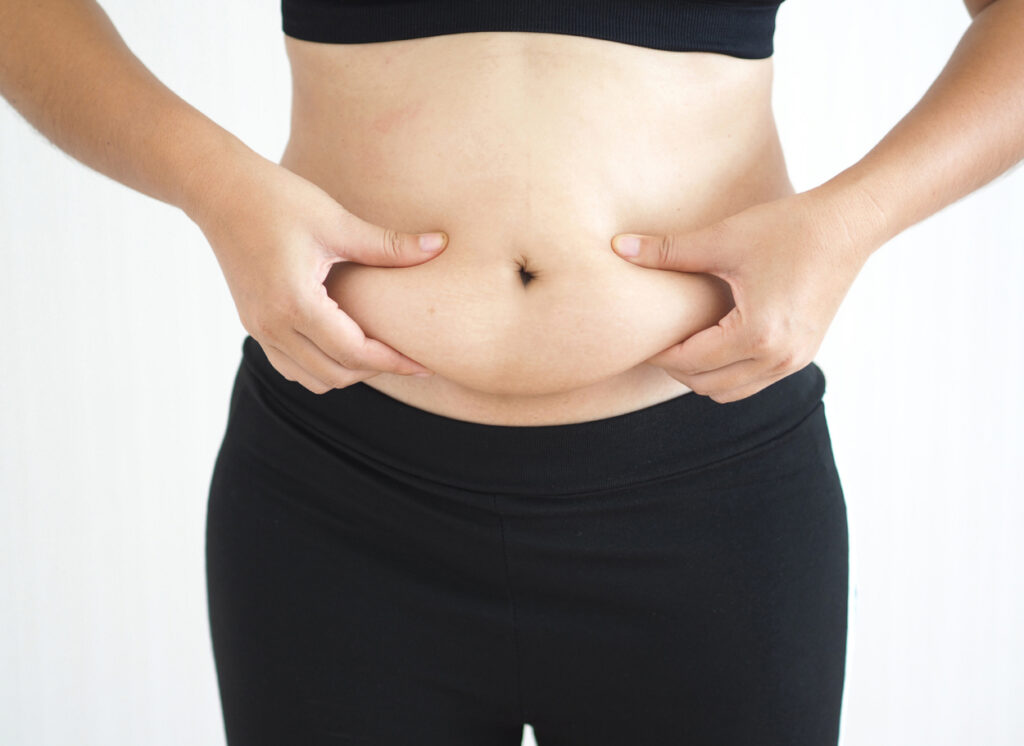

When people start looking into body contouring, they usually arrive with one question and discover they actually have five. They may think they want to “get rid of belly fat,” but what they really need to sort out is whether the issue is fat, loose skin, muscle separation, a stubborn pocket that does not respond to exercise, or a mix of all four. That is why comparing treatment options takes more than scrolling before and after photos.
The local market for Body Contouring Farmington Hills services reflects that reality. Med spas, cosmetic practices, and surgical offices often use similar language, yet they may offer very different technologies and very different kinds of care. One office may focus on noninvasive fat reduction. Another may be stronger in skin tightening. A plastic surgery practice may be the best fit for someone with significant skin laxity after weight loss or pregnancy. If you compare only price or only brand names, it is easy to choose the wrong category of treatment.
The better approach is to compare options based on your actual goal, your anatomy, your tolerance for downtime, and how much change you expect. That sounds simple, but in practice it requires some honest sorting.
Start with the result you actually want
A lot of disappointment in body contouring comes from mismatched expectations, not from bad treatment. Someone books a fat-freezing appointment because they dislike the way their midsection looks in clothing, but what bothers them most is skin looseness. Another person schedules radiofrequency tightening even though the true issue is a dense pocket of lower abdominal fat. Neither treatment is necessarily poor. The mismatch is the problem.
When I speak with patients or review common consultation scenarios, the most useful first step is clarifying the visual change they hope to see. Not “I want to look better,” but something specific. Do you want your waistline to look narrower in fitted clothing? Do you want a smoother line over the bra area? Are you trying to reduce fullness under the chin? Are you hoping your abdomen looks tighter after childbirth? A treatment that works beautifully on flank fat may do almost nothing for crepey skin above the knees.
This is where a skilled consultation matters. Good providers do not simply ask where you want to be treated. They assess tissue quality, pinch thickness, skin recoil, muscle tone, and whether your goals are realistic without surgery.
The main categories of body contouring, and why the category matters more than the brand
Many practices advertise by device name, which makes comparison harder for consumers. Brand names matter, but category matters first. Most body contouring options fall into a few broad groups: fat reduction, skin tightening, muscle toning, and surgical reshaping. Some treatments combine two of these, but very few do everything.
Noninvasive fat reduction treatments are designed for localized areas of stubborn fat. These are often best for people who are already fairly close to their comfortable weight but have isolated fullness in places like the abdomen, flanks, thighs, arms, or under the chin. They are not weight-loss treatments. The phrase “stubborn fat” gets overused in marketing, but the concept is real. Many lean, active people still have areas that do not change much with diet and training.
Skin tightening treatments focus on laxity. That might mean mild looseness after weight loss, age-related changes, or skin texture issues after pregnancy. These technologies typically use heat, radiofrequency, ultrasound, or related energy-based approaches to stimulate collagen remodeling. Results can be meaningful for the right patient, but there are limits. Once skin laxity becomes moderate or severe, noninvasive tightening often reaches its ceiling.
Muscle toning treatments target muscle contractions and can improve firmness or definition in areas like the abdomen or buttocks. These can be useful adjuncts, especially for patients who are fit but want more contour. They do not replace exercise, and they do not remove skin.
Surgical contouring, including liposuction and excisional procedures such as tummy tuck or arm lift, offers the most dramatic correction when someone has larger volume concerns, significant skin excess, or structural changes that noninvasive devices cannot address. Surgery also comes with more recovery, more cost, and more commitment.
That is why the smartest comparison is not “Which machine is best?” It is “Which treatment category actually addresses my primary concern?”
How noninvasive fat reduction compares in real life
Noninvasive fat reduction is often the first place people look because it promises contour improvement without incisions. For the right person, it can be a strong option. For the wrong person, it turns into a long series of sessions with modest change.
Cryolipolysis, commonly known as fat freezing, is intended to reduce subcutaneous fat by cooling targeted tissue. Patients tend to like it because it does not require anesthesia or major downtime. It works best on pinchable fat that can be drawn into the applicator or properly treated with the available handpieces. In practice, it is often chosen for the lower abdomen, flanks, upper arms, inner thighs, or under the chin. Results take time. You usually do not assess the full response in a couple of weeks. You wait, often for several weeks or a few months, to see the final contour shift.
Heat-based or radiofrequency-assisted body contouring can also reduce fat in some devices while improving skin firmness. This can be useful when a patient has both mild fullness and mild laxity. That combination is common after weight fluctuations. The trade-off is that these treatments often require a series rather than a one-time session.
The practical question to ask during a consultation is not just whether a device can treat your area. Ask how much change people with your body type typically see, how many sessions are common, and whether your tissue feels like a good candidate. Experienced providers can often tell when a patient wants a surgical-level result from a noninvasive treatment. A candid office will say so.
When skin tightening should move to the front of the conversation
Loose skin is one of the biggest reasons people feel underwhelmed by body contouring. They assume fat is the issue because fullness is visible, but what they are seeing may be skin drape or poor recoil.
This comes up often in the lower abdomen, above the knees, around the bra line, and on the upper arms. A patient may be relatively lean, yet the tissue still looks soft. After pregnancy, for example, some women have minimal residual fat but persistent laxity and texture changes. Treating fat alone in that situation can actually make looseness more noticeable.
Noninvasive skin tightening can help when laxity is mild to moderate. Treatments that use radiofrequency or ultrasound energy aim to stimulate collagen and improve firmness gradually. Improvement tends to be subtle to moderate rather than dramatic. It usually develops over time, not overnight. People who do best with this category are often realistic, patient, and willing to build improvement over several months.
If skin hangs, folds, or pools in a way that is clearly visible, especially after major weight loss, surgery often gives a better result. That can be a difficult message for patients to hear because noninvasive options sound easier. But honest comparison saves both time and money.
Muscle-focused contouring has a place, but it has limits
Muscle stimulation treatments have become more common, particularly for the abdomen and buttocks. These can create stronger contractions than a person can easily produce voluntarily, and some patients notice better muscle tone, firmer feel, and improved shape. In very lean patients, this can sharpen definition nicely.
Where these treatments get misunderstood is in how they are marketed. If someone has a layer of fat covering the area, enhanced muscle tone may not be visible enough to satisfy them. If someone has skin laxity, stronger muscle underneath will not tighten the outer layer in a dramatic way. Muscle contouring can be a useful part of a treatment plan, but it should not be presented as a solution for every body concern.
A practical example helps. Consider two people with similar complaints about their abdomen. One is athletic, has a stable weight, and wants more visible core definition. A muscle-focused treatment may be a reasonable fit. The other has lower abdominal fullness plus stretched skin after two pregnancies. That patient may need fat reduction, skin tightening, or surgery, depending on severity. The same treatment does not serve both equally well.
Surgical options often belong in the comparison, even if you hope to avoid surgery
People sometimes feel that consulting a plastic surgeon means they have already committed to surgery. That is not the case. In many situations, getting a surgical opinion simply gives you a more accurate baseline for comparison.
Liposuction remains one of the most effective ways to remove localized fat and reshape areas with precision. Recovery is real, but it is often more manageable than people fear when the case is straightforward and expectations are clear. Liposuction is especially worth discussing if you want https://marconjbr456.fotosdefrases.com/body-contouring-farmington-hills-treatments-that-fit-your-lifestyle a more noticeable change than noninvasive treatments typically deliver, or if you have already tried noninvasive treatments without enough improvement.
A tummy tuck enters the conversation when there is significant skin excess, abdominal muscle separation, or both. Noninvasive treatments cannot repair separated abdominal muscles. They cannot remove a meaningful amount of hanging skin. That distinction matters. Patients can spend a considerable amount on repeated med spa treatments chasing a result that only surgery can reliably produce.
That does not mean surgery is always the best choice. It means surgery should be part of an honest comparison, especially for postpartum bodies and post-weight-loss bodies.
What to ask at a consultation in Farmington Hills
The quality of the consultation often tells you as much as the treatment menu. If a provider recommends the same technology for nearly every concern, be cautious. Good consultations are specific. They include examination, not just conversation.
Here are the questions that tend to reveal whether you are getting real guidance or a sales script:
- What exactly are you treating in my case, fat, skin laxity, muscle tone, or a combination?
- Am I a strong candidate, an average candidate, or a borderline candidate for this option?
- How many sessions do patients like me usually need before they see a worthwhile change?
- What kind of result is realistic for my body, and what would this treatment not fix?
- If this were your body, would you choose this treatment or consider something else?
A thoughtful provider should be able to answer without hedging or overselling. They should also explain the trade-offs clearly. If they jump straight to packages and financing before describing candidacy, that is useful information too.
How to compare cost without getting fooled by the sticker price
Cost comparisons in body contouring are notoriously slippery because quoted prices may not represent the full plan. One office may quote per session, another by area, another by applicator, another by package. A treatment that sounds cheaper at first may require more sessions to approach the same level of improvement.
That is why “How much does it cost?” is not the most useful first question. Better questions are: how much change should I expect, how many visits are likely, and what is the total estimated investment for the result we are discussing? If a lower-cost option requires three or four rounds to produce a modest change, while another option costs more upfront but offers a stronger likelihood of meaningful improvement, the cheaper path may not really be cheaper.
There is also the issue of opportunity cost. If you spend months on a series of treatments that were never well matched to your anatomy, you lose time in addition to money. Many patients would rather hear a direct answer at the beginning, even if it is not the easiest answer.
Recovery time matters more than people think
Downtime gets reduced to a simple yes or no in advertising, but in practice it is more nuanced. Noninvasive does not always mean zero disruption. Some treatments leave swelling, tenderness, numbness, bruising, or temporary sensitivity. Others require patience because results emerge slowly and asymmetrically at first before settling.
Surgery obviously involves more recovery, but at least patients tend to plan for it. What catches people off guard with noninvasive body contouring is that they assume they will look better almost immediately. More often, they look the same for a while, then gradually start to notice contour changes.
When comparing Body Contouring Farmington Hills options, ask not only when you can return to work or exercise, but also when you are likely to feel socially comfortable, when swelling tends to peak if relevant, and when final results are usually evaluated. Those details matter if you are planning around a wedding, vacation, reunion, or family photos.
Before and after photos can help, but only if you read them carefully
Before and after galleries are useful, yet they are easy to misread. Lighting, posture, angles, and compression garments can change the impression substantially. The best galleries show consistency, not perfect drama. Look for patients whose body type resembles yours, especially in the treatment area you care about.
It is also wise to ask whether the results shown came from one session or several, whether the patient also changed weight, and how long after treatment the photo was taken. A slim patient with excellent skin tone is not the same case as someone with moderate laxity and thicker tissue. If the office cannot connect photos to realistic treatment pathways, the images become marketing decoration rather than decision-making tools.
Matching the treatment to a few common scenarios
Certain body contouring concerns show patterns. Not every case is identical, but a few examples can clarify how comparison should work.
Someone in their thirties with stable weight, good skin elasticity, and a small lower-abdominal pouch often compares well across noninvasive fat reduction options. They usually do best when they understand the result will be improvement, not perfection.
A postpartum patient with stretched skin, some residual fat, and possible muscle separation needs a more layered discussion. Devices may help at the margins, but if the goal is a flatter, tighter abdomen, surgery may belong in the comparison much earlier.
A patient who lost 60 or 80 pounds and has loose skin on the abdomen, arms, and thighs is usually not best served by a med spa promise of “tightening.” Those cases often require a surgical framework to achieve the kind of silhouette change the patient is picturing.
A fit patient bothered by softness at the flanks or bra line may be an excellent candidate for focused contouring, particularly if they are not seeking a dramatic transformation but a cleaner line in clothing.
This is where experience shows. Good clinicians recognize not just what can be treated, but what should be treated and what should be referred elsewhere.
Local selection matters as much as the device
In a place like Farmington Hills, you may have several reasonable options within a short drive. That is helpful, but it also means marketing is competitive. One office may emphasize luxury experience. Another may emphasize the latest device. Another may focus on physician oversight. The right choice often comes down to provider judgment and follow-through, not just hardware.
Pay attention to how the office handles nuance. Do they discuss alternatives, including treatments they do not offer? Do they acknowledge when more than one approach could work? Do they explain who is not a candidate? Those signals usually matter more than a polished website.
The strongest practices tend to do a few things consistently:
- They assess your anatomy directly rather than selling from photos alone.
- They explain realistic outcomes in plain language, not inflated promises.
- They tailor the treatment plan instead of pushing a one-size-fits-all package.
- They discuss recovery and timeline honestly.
- They are comfortable telling you when surgery, or no treatment at all, is the smarter answer.
That level of restraint is often a sign of confidence and experience.
The best comparison is honest, not optimistic
The reason body contouring feels confusing is that many of the options are legitimate, but each works within boundaries. The challenge is not finding a treatment that can do something. It is finding the treatment that can do the specific thing you care about, at a level that justifies the investment.
If you are researching Body Contouring Farmington Hills services, compare treatments by mechanism, candidacy, expected degree of change, number of sessions, total cost, and downtime. Compare providers by how carefully they evaluate you and how directly they communicate. That process tends to cut through the noise quickly.
Most people do not need the most aggressive option. They do need the most appropriate option. Once that distinction becomes clear, the decision usually gets much easier.
Aesthetic Plastic Surgery & Laser Center, Michelle Hardaway M.D.
Address: 27920 Orchard Lake Rd, Farmington Hills, MI 48334
Phone number: +12482211957
FAQ About Body Contouring Farmington Hills
What does body contouring actually do?
Body contouring (or body sculpting) eliminates stubborn localized fat, tightens loose, sagging skin, and reshapes your silhouette. It is not a weight-loss tool, but rather a cosmetic procedure used to refine and tone specific trouble spots after major weight loss, pregnancy, or aging.
How much does body contouring usually cost?
The total cost of body contouring usually ranges from $2,000 to $25,000+ depending entirely on whether you choose non-surgical sessions or major surgical procedures.
Because "body contouring" covers everything from simple fat-freezing to comprehensive post-weight-loss surgeries, pricing is heavily categorized by the method used.
What is the best type of body contouring?
Liposuction is a huge topic and worth discussing in more detail, but in terms of body contouring and sculpting, nothing does the job better than liposuction, particularly VASER liposuction.